Science That Makes Children Love Learning
Seven award-winning courses that ground your children in real science and a love for the God who made it. Written to your child and tested in my own home.
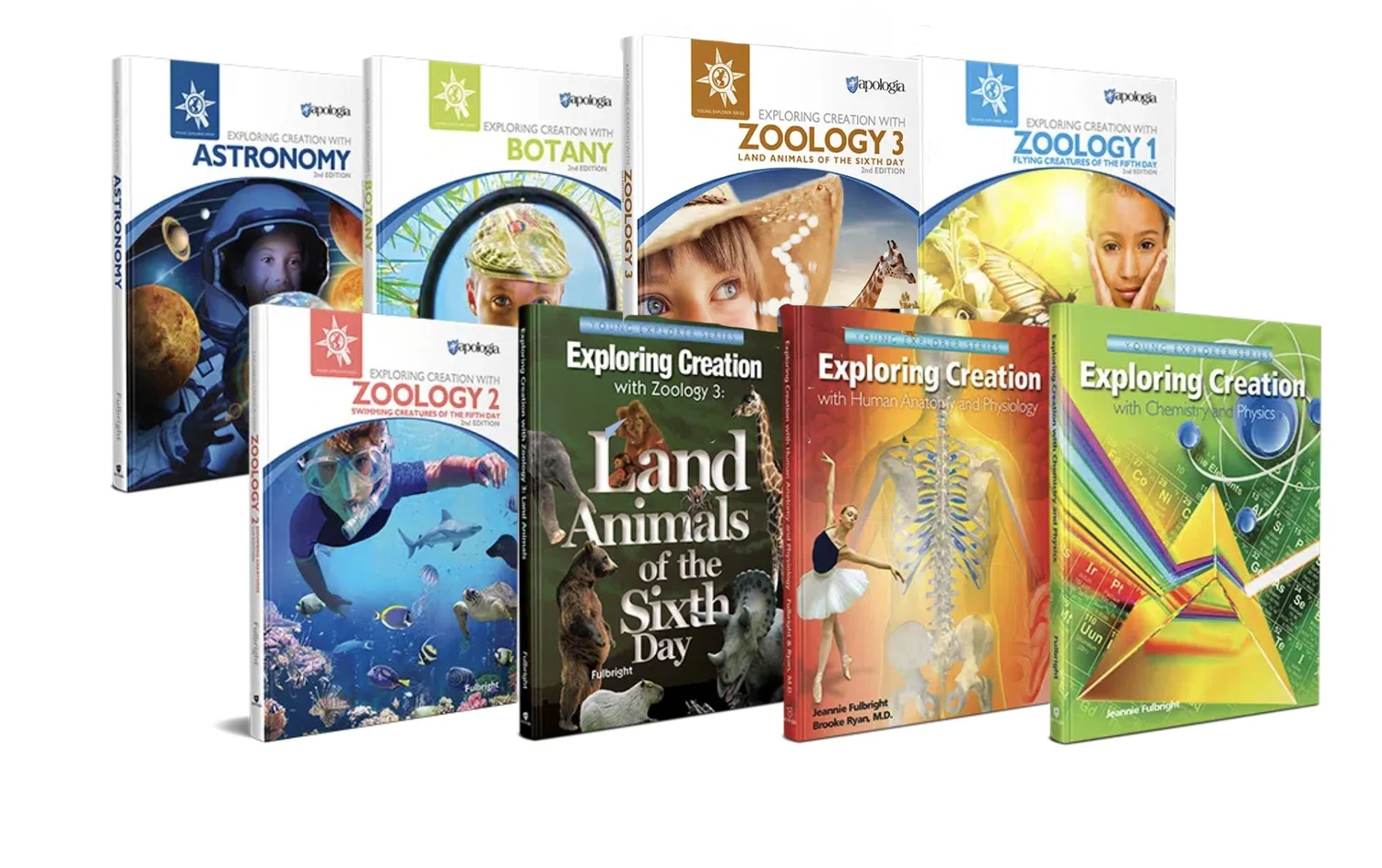
Used and adored by over a million families

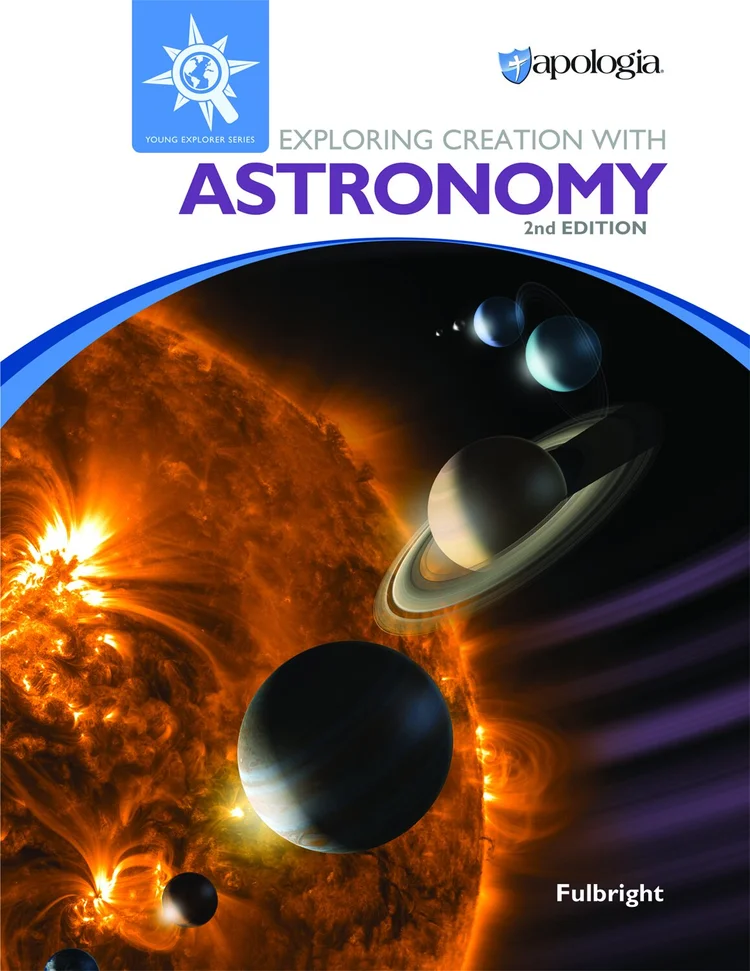
Astronomy
Journey through the universe: the sun, moon, planets, comets, and stars. Fourteen lessons with narration prompts, notebooking, and hands-on projects like building a rocket and a telescope. By year's end your children answer questions that stump most adults.
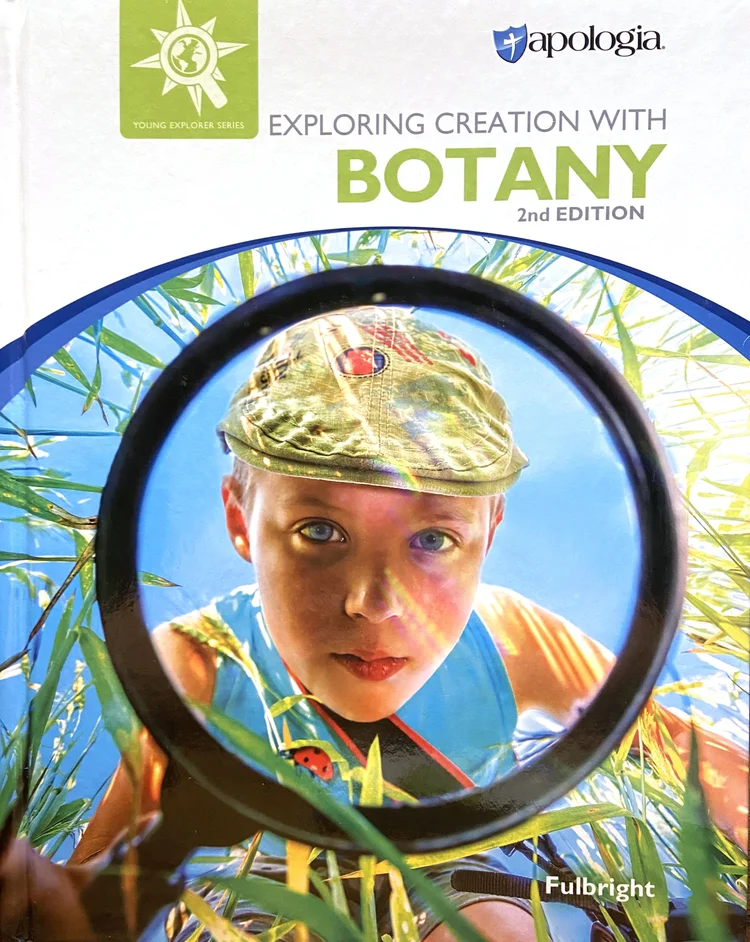
Botany
Explore everything green and growing, from a tiny seed to the giant sequoias. Your children dissect flowers, pollinate plants, start a garden, and build a field guide of the plants in your own yard. Every lesson brings the outdoors to life.
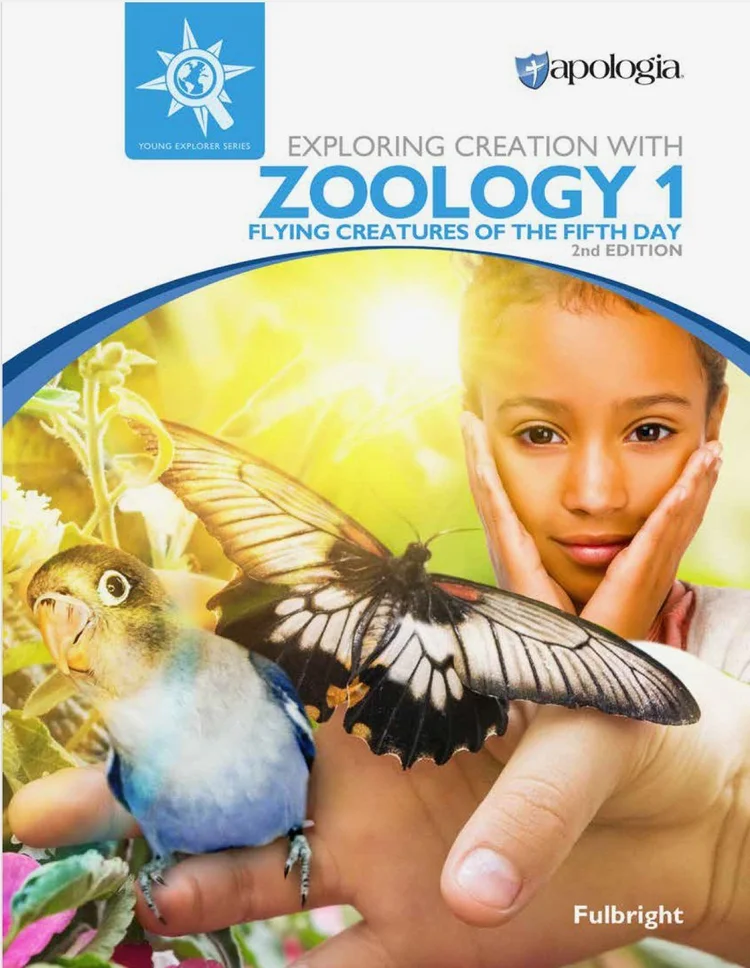
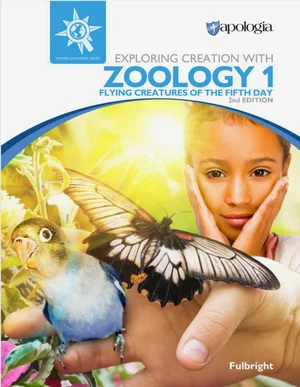
Zoology 1 · Flying Creatures
Take to the sky with birds, bats, and flying insects. Your children start a birding Life List, study feathers, nests, and migration, and become amateur ornithologists and entomologists through real hands-on experiments.
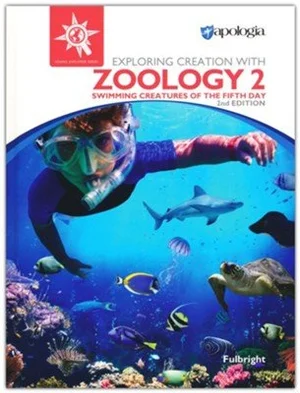
Zoology 2 · Swimming Creatures
Dive into the oceans and waters God filled on the fifth day, from whales and dolphins to crabs, corals, and clams. Students build an Ocean Box aquarium, a handcrafted keepsake of everything they learn.
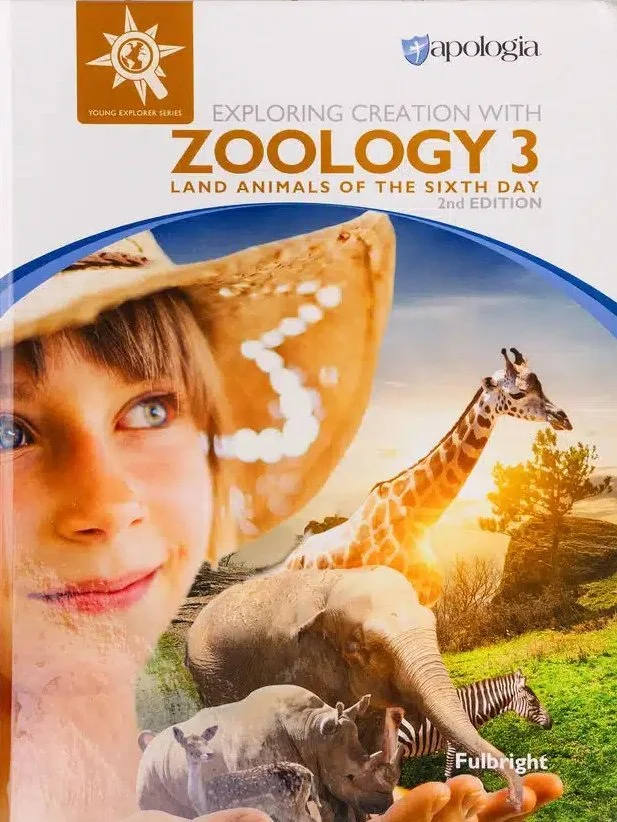
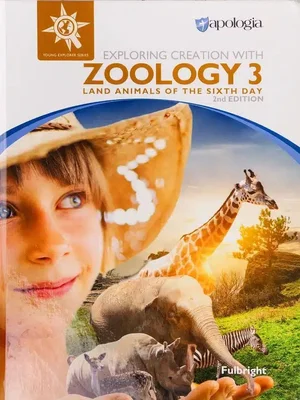
Zoology 3 · Land Animals
Safari through jungles, deserts, and your own backyard to meet the animals of the sixth day. The year-long Drive Thru Animal Atlas builds geography, and Creation Confirmations throughout strengthen your child's faith.
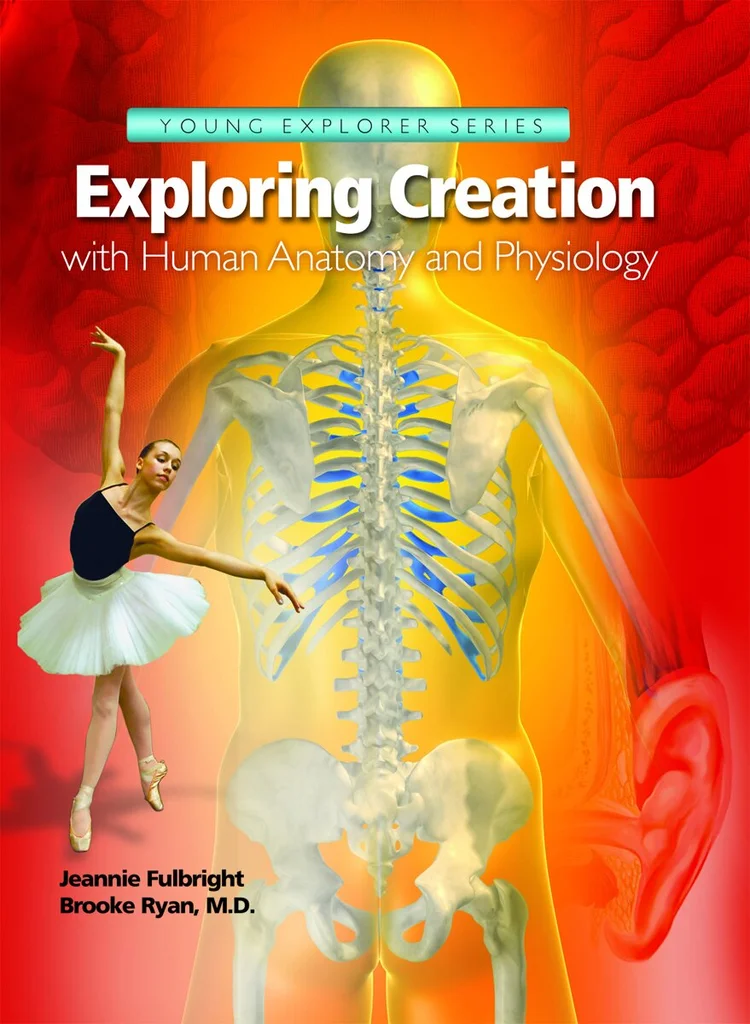
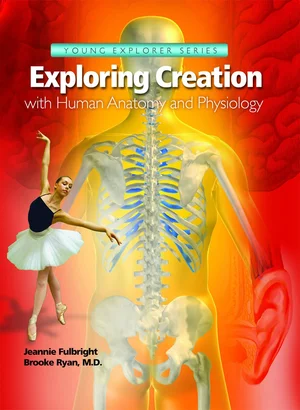
Anatomy & Physiology
From the brain in your head to the nails on your toes, explore how God designed the human body. Kids build a personalized body figure, find their blood type, make a cell from candy, and even build a working stethoscope.
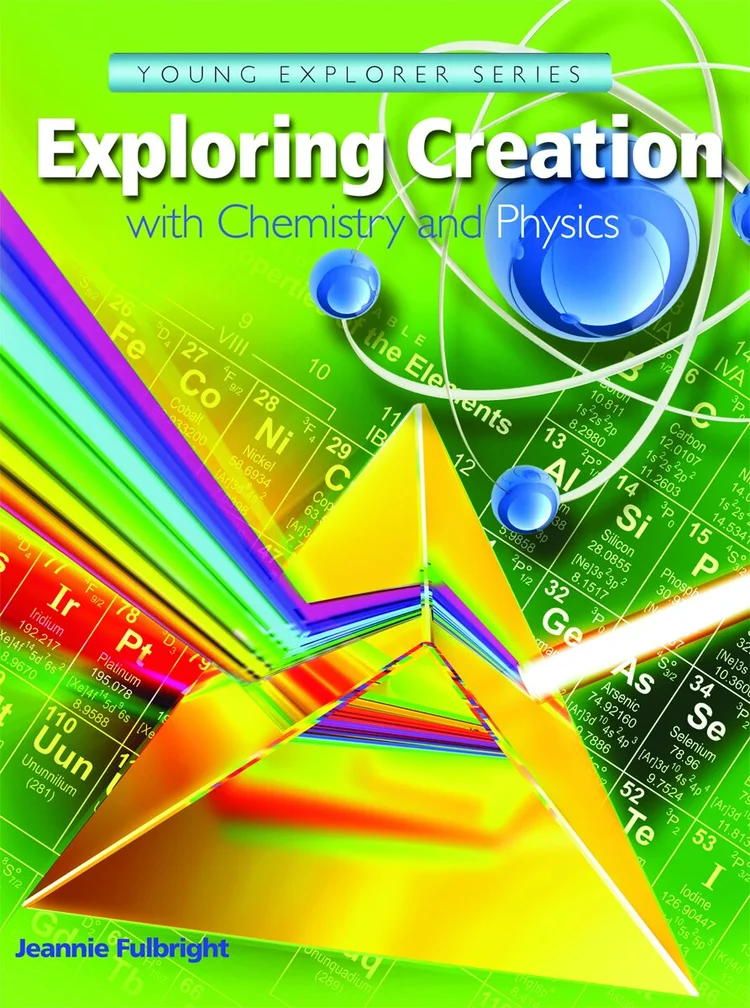
Chemistry & Physics
Atoms to Archimedes, Newton's laws to nuclear energy. Hundreds of hands-on demonstrations bring matter and energy to life, from a homemade electric motor to Periodic Table cookies. Foundational science your family will love.
“Awesome and informative book. As a registered nurse, I must say I am impressed with this for my middle school son.”
Why Have Millions of Homeschoolers Made Jeannie's Apologia Series Their Science of Choice?
✦Honors God as Creator
Your children learn the evidence for God as Creator, and their faith grows stronger as the science goes deeper.
✦Written by a homeschooling mom
I wrote and tested every lesson, experiment, and activity while teaching my own four children.
✦The Charlotte Mason method
Narration, notebooking, and living books, the proven way children actually learn and remember.
✦Whole-book immersion
A full year in one field of science, so children truly grasp it instead of skimming the surface.
✦Grows a love for learning
Wonder comes first. The facts follow, and they stay, because your child cared about them.
✦One book, every age
Teach all your children together from a single book, each responding at their own level.
Which Book Should We Start With?
You can't pick wrong. The books aren't a ladder, so you don't start at the bottom and climb your way up. Start anywhere.
If your child is already curious, follow it. The one who flips rocks looking for bugs starts with Zoology. The stargazer starts with Astronomy. The child who wonders how her own body works starts with Anatomy & Physiology.
If no one is leaning yet, follow your own delight. Choose the book you most want to read aloud. Children catch your wonder faster than any fact, so start where you will love sitting down together.
And you won't outgrow them. Each book carries all the way through high school with a little supplementation, so the one you open with your eight-year-old can earn a full credit with your fourteen-year-old.
How Long Does a Lesson Take?
Follow my four-day-a-week schedule and most days take less than 20 minutes a day. Find the free four-day schedules below.
If you prefer to do science two days a week, using the two-day-week schedule in the Notebooking Journal, science can take anywhere from 20 to 40 minutes a day, if you choose to do all the activities. The activities are completely optional and should only be done if they suit your family. Many families have simply enjoyed reading the books and discussing the science together.
How Involved Is Each Lesson?
Each day, your child reads a short, engaging lesson. After the reading, you will be given one or more of the following (remember, everything but the reading is optional):
- A narration prompt, where your child tells back what they learned
- A hands-on activity or experiment
- A notebooking activity
- A project
These books have been the number one best-selling science for more than twenty years, and many parents simply read the text and discuss what they've learned, choosing to forgo all the other activities. That is perfectly fine as well. Mold your children's education to your unique family. That is what a living education is all about.
Listen to the Audiobook
Many families enjoy the audiobook together, in the car on the way to activities, at bedtime, or any time of day. The audiobooks are wonderful for:
- Auditory learners
- A child working through the book independently
- Children learning while mom works
- Struggling readers
- Anyone who loves a good audiobook
“We love this book! I was expecting it to be sort of hokey with cheesy Christian references, but I am super impressed at the detail and level of biblical instruction included in each chapter. My children love reading about science in terms of religion, and so do I. We will continue to buy textbooks from this company. The science experiments require just the right amount of involvement—not too much, not too little—which works perfect for me, as I'm not a parent that likes a lot of prep work for science experiments that cause clutter or will be quickly thrown away.”
Your whole week, already planned
Thirty weeks · Four days a week · Every basic subject on one page
Looking for an Open and Go Daily Schedule? Look no further. Although our notebooking journals come with a two-day weekly schedule for completing each book, I've created four-day weekly, 30-week schedules that also include every subject in my living curriculum bundle.
Apologia science, Living Streams for history and geography, Living Verse for language arts, and Culture & Craft for enrichment. Filled in for you, page numbers and all. Blank rows wait for your Bible or devotional, your math, and your reading and literature.
And every schedule is fully editable, so you can adjust anything you like to fit your family.
Fillable PDF. Open in Adobe Acrobat Reader (free) to type in your own subjects, then print.

Why I wrote this series
This was never a business. It's a ministry to families who want to build their children's faith while they teach real, engaging science.
I wrote these books in the trenches of my own homeschool, testing every experiment and activity on my own children. I know what works and what doesn't. And I know the mother reading this, because I was her.
Read My Story“We have used Apologia Science textbooks forever. I decided to try the Human Anatomy Book. I overheard my 16 year old son talking to my 8 year old son… they were discussing Anatomy. My 16 year old had been reading it to his brother (on their own!). To me, that is the best recommendation. We love it!”
Turn Young Explorer Into a Full High School Credit
Your Young Explorer books aren't only for your younger children. Each one can earn a full high school science credit by adding some supplementation. I've laid out a weekly lesson plan that maps the reading, assignments, and lab work across the year and readies it for your transcript.
High School Astronomy
A weekly lesson plan that carries your student through Exploring Creation with Astronomy for a full year of high school science credit, with the assignments mapped out and ready for your transcript.
Download the Astronomy Lesson PlanHigh School Botany
A weekly lesson plan that turns Exploring Creation with Botany into a full year of high school science credit, with the assignments mapped out and ready for your transcript.
Download the Botany Lesson PlanHigh School Anatomy & Physiology
A weekly lesson plan that turns Exploring Creation with Anatomy & Physiology into a full year of high school science credit, with the assignments mapped out and ready for your transcript.
Download the Anatomy Lesson PlanHigh School Zoology
A weekly lesson plan that turns all three Zoology books into a full year of high school science credit, with the assignments mapped out and ready for your transcript.
Download the Zoology Lesson PlanAstronomy
Take your kids on a journey through the Universe this year! Exploring Creation with Astronomy investigates everything in space, from the sun, the moon, the planets, comets, asteroids and meteors to stars, galaxies and space travel. Through this in-depth study, your students will be able to answer questions that stump most adults, such as how to tell a planet from a star in the night's sky, what causes auroras, how the sun's light gives us color, why we have seasons, how and why the moon goes through phases, how to find Mercury, Venus, Mars, Jupiter and Saturn and, most importantly, why thermonuclear fusion and short-period comets give us powerful evidence for a young earth creation model for origins.
Each of the fourteen lessons is written to the students with engaging prose that captures even the youngest child's attention.
Throughout each lesson, narration prompts encourage students to relate their new knowledge in their own words, increasing comprehension and retention. Included are creative and fun notebooking assignments, vocabulary and learning activities that further their experience with the lesson. Through experiments and projects, your students will engage in hands-on learning such as building a small, but powerful rocket, building a telescope, discovering how radar works, making a compass, as well as creating an actual model of a solar eclipse.
These and many more interesting activities and learning adventures will become part of your child's knowledge base as they become experts in astronomy over the course of the year.
As with all the books in the Fulbright Science Series, this wonderful book includes narration prompts, notebooking assignments, review questions, projects, experiments, and an accompanying Notebooking Journal that brings all their learning, creativity and projects together in one beautiful keepsake.
Botany
Get ready to explore all things green, growing, and wonderfully alive. From the anatomy of a tiny seed to the tops of the giant sequoias, your student will fall in love with the world God created right outside the door. They'll dissect flowers, pollinate plants, grow their own blooms to attract birds, butterflies, and bees, and even start an organic garden as they learn how to grow food for their family.
Students will identify the plants and trees in their own yard and create a field guide to match. They'll explore mycology, mushrooms, mold, spores, lichens, and the hidden world of fungi that helps God's creation flourish. From making herbal soap and tracking a leaf from its first days to its last, to exploring fern spores and measuring pollution with a lichenometer, your students will find the outdoor world full of fascinating discoveries.
Nature walks, hikes, gardening, and camping will take on new meaning as you and your students comprehend the complexity and diversity God created within the Kingdom Plantae.
As with all the books in the series, every lesson includes engaging text, narration prompts, and notebooking assignments that bring the subject to life. Students will make comic strips of pollinating creatures, write stories, diagram and illustrate roots from their yard, grow plants, keep records, and create a beautiful keepsake of all they have learned.
Zoology 1 · Flying Creatures
How do bats use echolocation? Which insects do ants keep as pets? What are the stages of complete and incomplete metamorphosis? How can you distinguish insects from other arthropods? Which Biblical writers described pterosaurs in ancient texts? How do birds find their way during the thousands of miles they travel while migrating?
Answers to these and many more fascinating questions about the flying creatures God created can be found in Zoology 1.
Your children will begin by exploring the scientific aerodynamics of flight, along with a comprehensive study of animal classification. Then they'll soar into the exciting world of birds. Students will learn how to attract birds to their yard, identify species, and begin their own birding "Life List," much like birders around the world.
They'll discover fascinating information about nests and nesting habits, songs and calls, feather design, migration, and the remarkable instincts God placed within these creatures. Included are experiments using the scientific method that investigate the habits and preferences of birds in your own area.
After becoming amateur ornithologists, your children will explore the world of chiropterology, the study of bats. They'll learn the truth about these gentle nighttime creatures and gain the knowledge to correct common misconceptions while appreciating the important role bats play in God's creation.
Students will also investigate the ancient world of flying reptiles, such as pterosaurs, and examine the evidence suggesting a more recent extinction of these amazing creatures.
Finally, your children will become expert entomologists as they explore the incredible world of insects. They'll learn how to classify insects by wing structure and other identifying characteristics. Through hands-on experiments with flies, crickets, darkling beetles, moths, and caterpillars, students will engage in meaningful scientific discovery.
They'll also learn how to attract, observe, and collect insects for scientific study and will be encouraged to begin their own insect collection, much like students in many college-level life science courses.
Zoology 2 · Swimming Creatures
From rivers and streams to the mighty oceans, God filled the waters with animals great and small. At His Word, enormous whales sprang into being. At His command, billions of plankton leaped to life. Sea turtles, sharks, dolphins, squid, salmon, crayfish, snails, and countless other aquatic creatures joined together in the waters on the fifth day of creation.
Exploring Creation with Zoology 2 takes your family on an unforgettable journey through the wonders of the deep and shallow waters of the world. Your students will begin with whales and dolphins, then investigate seals and manatees before swimming alongside sea turtles, snakes, and salamanders. They'll even explore the world of ancient marine reptiles such as plesiosaurs and examine the evidence surrounding these fascinating creatures.
As they continue their underwater adventure, students will discover fish and sharks, crabby crustaceans, sea snails, clams, octopuses, squid, nautiluses, corals, starfish, sea feathers, sand dollars, and even sponges that truly do clean. From microscopic plankton to the largest creatures on earth, no shell is left unturned in this exciting study of aquatic life.
Throughout the course, your student will create replicas of many of the sea creatures they study and place them into their own Ocean Box, a miniature handcrafted aquarium that becomes a treasured keepsake of their learning.
Narration prompts are woven throughout every lesson, along with engaging "Try This!" activities that bring the concepts to life through hands-on exploration. Students will experience the challenge of a sea turtle crawling onto land, measure their own teeth to estimate the size of sharks, and investigate why some animals fossilized during the Flood while others did not.
Each lesson also includes notebooking assignments, Ocean Box projects, experiments, and scientific investigations that reinforce the scientific method and deepen understanding. Students will try on blubber, test how sharks sense electrical currents, explore how whales hear sounds across oceans, and experiment to discover which creatures make the best fossils.
No matter how near or far you live from the ocean, you and your students will stand in awe of God's creativity and power displayed in the aquatic animals He formed on the fifth day. So slip on your scuba gear and come explore with us!
Zoology 3 · Land Animals
What separates people from apes? How can a Great Dane be related to a Chihuahua? Is there evidence that people and dinosaurs once lived at the same time? What should you do if you encounter a bear? How can you tell whether a snake is venomous?
Come discover the answers to these questions and many more in Exploring Creation with Zoology 3!
This third and most comprehensive book in the Zoology series takes students on a safari through jungles, deserts, forests, farms, oceans, and even their own backyard. Your upper elementary students will explore, examine, and enjoy the fascinating creatures God designed on the sixth day of creation. Families will snuggle together and discover amazing animals ranging from primates to parasites, kangaroos to caimans, and turtles to terrifying Tyrannosaurus rex.
Narration prompts and engaging hands-on activities are woven throughout every lesson to bring the material to life. Students will tape their thumbs to their hands to experience life without opposable thumbs, practice what to do if they encounter a bear in the wild, fit continents together to understand animal distribution around the world, and even play tracking games that imitate how jungle animals locate prey and predators.
Throughout the course, students will also enjoy the year-long Drive Thru Animal Atlas project, adding animals to the continents where they live while strengthening geography skills and building a beautiful visual record of the creatures they study. They'll learn to draw and identify many different kinds of animals and animal tracks as they create their own keepsake notebook of discoveries.
As with all the Apologia elementary science courses, notebooking activities are designed to deepen understanding, increase retention, and provide a meaningful record of learning. Students may create a travel brochure for an African safari, compare reptiles and amphibians, illustrate spider webs found around their home, or produce a canine newsletter highlighting fascinating facts about carnivores.
Each lesson concludes with adventurous projects, activities, and experiments that reinforce scientific concepts through hands-on exploration. Students may dissect an owl pellet to reconstruct a rodent skeleton, capture animal tracks in their yard, participate in simulated population studies, and create animal trivia games that review everything they've learned in a memorable and exciting way.
One of the most powerful features of this course is the many Creation Confirmations woven throughout the text. These sections highlight zoological discoveries and animal characteristics that point powerfully to a young-earth, God-designed model of creation. By the end of the course, your students will not only have a deeper understanding of the animal kingdom, but also a stronger and more confident faith in God as Creator.
Anatomy & Physiology
From the brain in your head to the nails on your toes, you and your students will encounter fascinating facts, engaging activities, intriguing experiments, and loads of fun as you learn about the human body and how to keep it working well.
Beginning with a brief history of medicine and a peek into cells and DNA, your students will voyage through fourteen lessons covering many subjects, such as the body systems: skeletal, muscular, respiratory, digestive, cardiovascular, nervous and more! They'll study nutrition and health, how God designed their immune system to protect them, along with embryology and what makes them a unique creation of God.
As they work their way through the course, your students will enjoy adding the organs about which they learn to their own personalized human figure to be placed in their course notebook.
In addition to all this exploration, your students will enjoy scientific experiments and projects, such as testing the bacteria content around the house, finding their blood type, creating a cell model from Jello and candy, and even building a stethoscope!
In keeping with the other books in the Apologia elementary science Young Explorer Series, the Charlotte Mason methodology is employed with engaging narratives, narration prompts and notebooking projects, all of which reinforce their learning using proven techniques that strengthen retention.
Chemistry & Physics
Discover the electrifying, exhilarating, and energetic world of chemistry and physics with Exploring Creation with Chemistry & Physics by Jeannie Fulbright. Get ready for physical science like you've never experienced before!
This exciting course brings shock and awe to your science studies as your family investigates the fascinating world of matter and energy. With hundreds of hands-on demonstrations and engaging activities, students will discover everything from atoms to Archimedes, nuclear energy to Newton's Laws of Motion, sound waves to simple machines, and the incredible forces God used to create and sustain the world around us.
Your students will explore the elements that make up creation while learning the scientific laws that govern motion, light, electricity, heat, magnetism, and energy. Through easy-to-understand explanations, notebooking assignments, narration prompts, projects, and experiments, science becomes meaningful, memorable, and fun.
Hands-on projects throughout the course include manufacturing a homemade electric motor, creating delicious Periodic Table of the Elements cookies, building batteries from surprising substances, constructing a mousetrap car, experimenting with motion and force, and much more.
Like all the books in the Young Explorer Series, this course uses the Charlotte Mason methodology through engaging narrative lessons, notebooking, narration, and creative projects that strengthen comprehension and retention while nurturing curiosity and wonder.
Exploring Creation with Chemistry & Physics introduces foundational concepts students will continue building upon in junior high, high school, and beyond. It is sure to delight, excite, and ignite the scientist in your family!